
Emergency Garage Door Repair Near Me: What Long Beach Homeowners Should Do First
If your garage door just snapped a spring or jammed with your car trapped inside, the first thing to do is simple: stop using the opener, check whether the door can be safely moved by hand, and secure the opening. If the door is stuck halfway or won’t budge, leave it alone and call (866) 477-5637. Most genuine emergencies in Long Beach involve either a broken spring under dangerous tension or a door that won’t close, leaving your home exposed. Here’s exactly what to do in the first 15 minutes before a technician arrives.
The First 15 Minutes: A Rapid Safety Triage
Every emergency call we take in Long Beach starts with the same question: is this actually an emergency, or is it an inconvenience? The distinction matters because it determines what you do next and whether you’re about to pay a late-night dispatch fee for something that could wait until morning.
Here’s the triage we walk homeowners through:
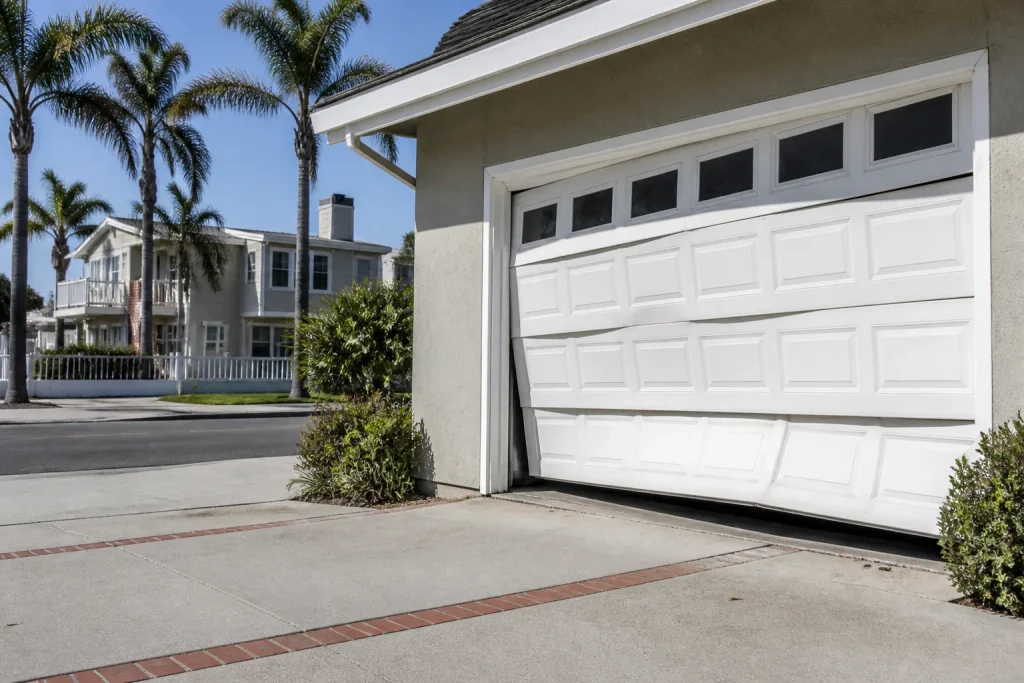
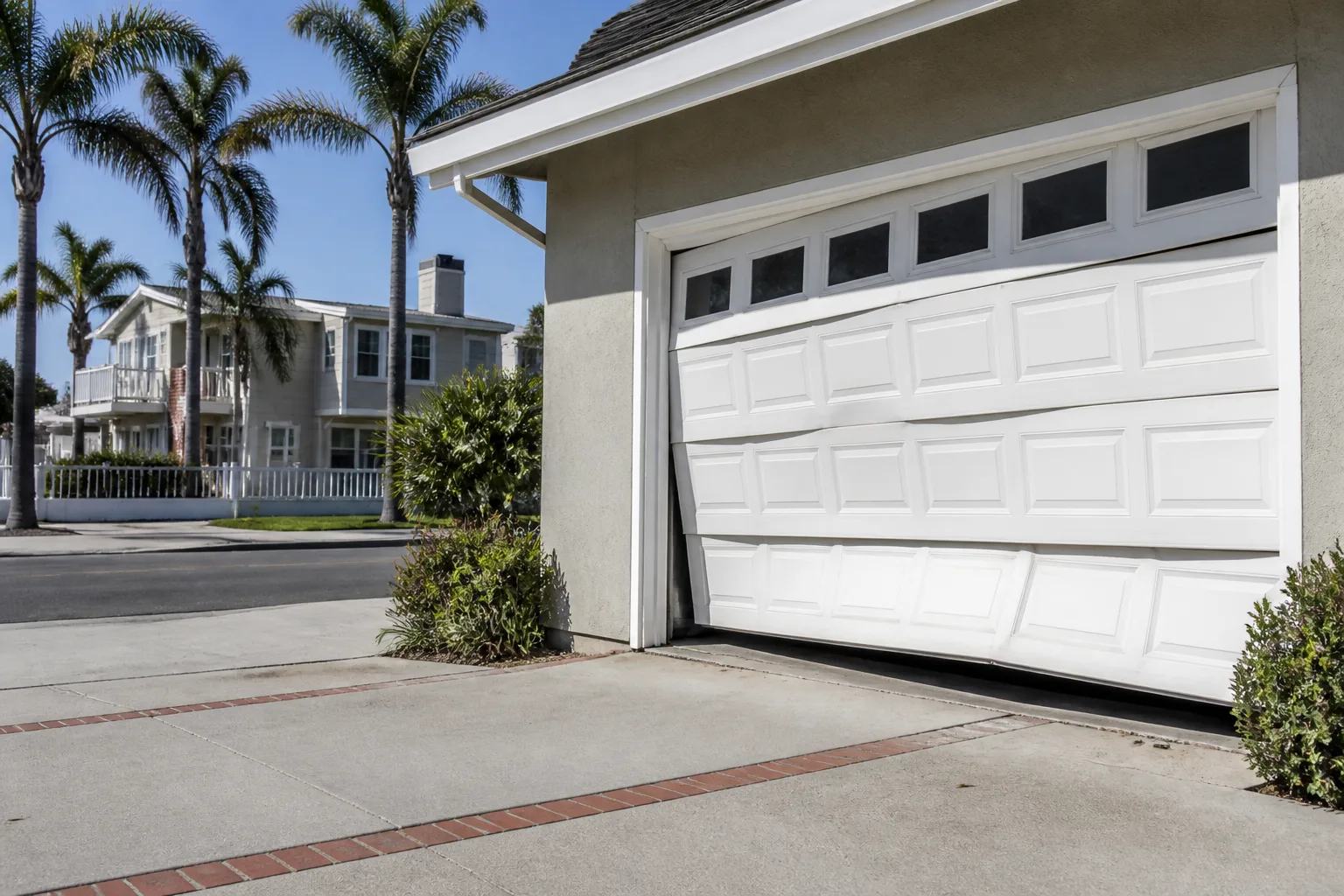
- Broken spring under tension: If you heard a loud bang like a firecracker and the door won’t lift, that’s a snapped torsion or extension spring. This is a true emergency. The spring is holding hundreds of pounds of force, and if the door is partially open, it can slam down without warning. Do not touch the door, do not pull the red release cord, and do not try to lift it. Call immediately.
- Door stuck in the open position: This is a security emergency, especially overnight. A wide-open garage is an invitation to anyone walking down the alley. Even if the mechanical issue can wait, the exposure can’t. There are temporary measures that work (more on that below), but a technician should still come out.
- Car trapped inside: If the door won’t open and you need the car, that’s a practical emergency. Some openers can be manually released, some can’t without risk. The make of the opener matters here.
- Noisy operation, slow movement, or intermittent issues: These are almost never emergencies. If the door still opens and closes, even sluggishly, it can generally wait until a regular appointment. We’ve had homeowners in Belmont Shore call us at 11 p.m. for a squeaky roller. Save the service fee.
One thing we’ve learned from years of emergency calls in Long Beach: the homeowners who stay calm and follow a simple checklist get better outcomes than those who panic and start yanking on things. Broken springs account for the majority of genuine emergencies we see, and they’re also the most dangerous component on your door.
How to Manually Release Your Opener: LiftMaster, Genie, and Chamberlain Steps
If your opener won’t respond but the door itself is intact, you may be able to operate it manually. This works for the three brands we see most often in Long Beach homes: LiftMaster, Genie, and Chamberlain. The key is knowing when manual operation is safe and when it isn’t.
When manual release is safe: The door moves freely when detached from the opener, there are no visible broken springs or cables, and the door is balanced enough to stay in place when lifted halfway. If any of those conditions fails, skip the manual release and call a pro.
LiftMaster and Chamberlain (same parent company, similar mechanism):
- Find the red emergency release cord hanging from the opener rail. It’s usually within a few feet of the motor.
- Pull the cord straight down and toward the door. You’ll hear a click as the carriage disengages.
- Lift or lower the door by hand using the handle or the bottom edge. Move slowly.
- To re-engage, pull the cord down once more and press the wall button to reconnect the carriage.
Genie systems:
- Look for a red cord near the top of the door, but note that some Genie models use a carriage release on the rail itself.
- Pull down firmly on the cord until the carriage releases from the belt or chain.
- Operate the door manually. Some Genie openers have a secondary release lever near the motor.
- Re-engage by running the opener once while the door is in the down position.
A word of caution: if the door feels heavy when you lift it, that’s a sign the springs aren’t doing their job. Lower it gently and stop. A door that weighs 150 pounds with working springs weighs the full 150 pounds when a spring breaks, and that’s how people get hurt. We work on these systems daily in Long Beach, and the manual release is useful, but it’s not always the right move.
When the Door Is Stuck Open: Temporary Security Measures That Actually Work
A garage door stuck open at night in Long Beach is a different problem than one stuck closed. You’re not just dealing with a mechanical failure, you’re dealing with an exposed entry point to your home. Here’s what works, what doesn’t, and what can wait until the tech arrives.
What actually works:
- Lock the interior door: The door between your garage and your house is the real security boundary. If it has a deadbolt, use it. This single step neutralizes most of the risk while the garage door itself is open.
- Remove valuables from the garage: If your car isn’t trapped, pull it out and park it on the street or in the driveway. Move bikes, tools, and anything portable into the house. A thief can’t steal what isn’t there.
- Secure the overhead door with a C-clamp or locking pliers: If the door is partially raised and you’re worried about it dropping, clamp a pair of locking pliers onto the track just below the bottom roller on both sides. This prevents the door from moving in either direction. It’s a temporary measure, but it works.
What doesn’t work:
- A rope or bungee cord holding the door up: We’ve seen it. It gives a false sense of security and the door can still drop.
- A 2×4 propped under the door: It works until it doesn’t. If the door shifts, the board kicks out and the door comes down.
- Tarping the opening: This works against rain and not much else. It doesn’t stop people and it tells everyone passing by that your garage isn’t secure.
Here’s a real example from a few months back: a homeowner in the Los Altos neighborhood had a spring snap on a Sunday night, door stuck open, car in the driveway. She locked the interior door, moved her tools into the house, and called us in the morning. The repair took forty-five minutes and she never paid a single emergency fee. Smart triage saves money.
Three Questions to Ask Before Agreeing to Emergency Service
When you’re calling around for emergency garage door service in Long Beach at odd hours, you’re at a disadvantage. The person on the other end knows you’re stressed. The best defense is knowing what to ask before you agree to anything.
- Is the price a flat fee or hourly? Emergency calls are frequently priced per hour, and the clock starts when the truck rolls, not when the tech arrives. A flat fee is almost always better for you. If they won’t quote a flat fee over the phone for a standard spring replacement or opener release, that’s a red flag.
- What’s the trip charge if I decline the repair? Some companies wave the trip fee if you approve the work. Some charge $75 to $150 regardless. You deserve to know before the truck shows up. If the answer is vague, keep calling.
- Do you carry springs, cables, and opener parts on the truck? A real garage door company runs stocked trucks. If the tech has to “order parts and come back later,” you’ve just paid a trip fee for a quote. We carry common spring sizes, cables, rollers, and opener components on every truck we send out in Long Beach.
These questions take ninety seconds to ask and they’ll tell you more about a company than any review site will.
How to Verify a Repair Company Is Legitimate in Under Five Minutes
The garage door industry attracts operators who know homeowners search “emergency garage door repair near me” when they’re in a bind. Slick website, fake reviews, vague address. Here’s how to check a company without leaving your phone.
Step 1: Check the Long Beach business license. The city requires businesses operating within Long Beach to hold a valid business license. Run the company name through the city’s online business license lookup. If they aren’t there, move on.
Step 2: Scan Google reviews for patterns, not averages. A five-star average with only twelve reviews is meaningless. Look for reviews that mention specific streets, specific neighborhoods, specific door brands. “They fixed my LiftMaster in Belmont Heights” is far more credible than “great service, fast and friendly.” Read the negative reviews too. You’re looking for complaints about surprise charges, not slow arrivals.
Step 3: Ask about brands directly. Call and say “I have a Raynor door with a Genie opener, do you work on those?” A brand-agnostic specialist will answer immediately, because the answer is yes and they’ve done it a hundred times. A generalist will hesitate or say “we can take a look.” You want the company that already knows your equipment.
We built Blackstone Garage Door Repair with this specific problem in mind. We’re trained on eight major brands including Raynor, LiftMaster, and Genie, so the answer to “do you know my system” is always yes. No one should have to gamble on a technician who’s going to Google their door model in the driveway.
And here’s the honest part we always tell homeowners in Long Beach: most “emergency” calls we get are solved in under an hour once the right parts are on site. The emergency isn’t the door. The emergency is the uncertainty of whether you’re being overcharged by someone who knows you’re in a tight spot. That’s why we quote the price before we start any work. The number you agree to is the number you pay.
When to Call a Pro (and When You Can Wait)
Some things are genuinely dangerous to fix yourself. Broken springs, damaged cables, and bent tracks all carry real risk of serious injury. The spring on your door is under enough tension to break bone. If you can see a gap in the spring, hear grinding when the door moves, or notice the door leaning to one side, that’s not a do-it-yourself moment. Get help.
On the other hand, if your door operates but makes noise, or the remote’s range has gotten worse, or the door reverses for no reason, that’s a repair call you can make during normal business hours. You’ll pay less and the fix will be the same.
If you’re in Long Beach and need help, Blackstone Garage Door Repair is the team that shows up knowing your door. For more on what we do, take a look at our Garage Door Repair in Long Beach page or our Garage Door Opener Repair in Long Beach service. And if the door’s beyond saving, Garage Door Installation in Long Beach covers full replacements, from measure to cleanup. Start with the Blackstone Garage Door Repair home page for an overview of everything we handle.
The Bottom Line
In a garage door emergency, the first 15 minutes set the tone for everything that follows. Triaging correctly saves you money and keeps you safer. Secure the interior door, assess whether the spring is broken, and only attempt a manual release if the door moves freely. Ask the right questions before agreeing to service. Verify the company before they arrive. And if the situation is dangerous or you’re not sure, call (866) 477-5637. We’ll tell you honestly whether it’s an emergency or can wait until morning.
Frequently Asked Questions
Emergency garage door repair in Long Beach typically runs $180 to $400 for a standard spring replacement including parts and labor, with after-hours calls adding a dispatch fee that varies by company. The exact total depends on the spring type, the door weight, and whether any other components were damaged when the spring let go. Ask for a flat fee over the phone before the truck rolls. Call (866) 477-5637 for a free estimate and a straight answer on pricing.
Yes, in most cases a broken spring can be replaced the same day, often within a few hours of your call. The repair itself takes 45 to 90 minutes. The catch is that the truck needs to have the right spring on board, which is why we run stocked trucks on every Long Beach service call. If your spring snapped overnight, call (866) 477-5637 in the morning and you can usually have the door working before lunch.
It depends on the time of day and what’s inside. If the door is stuck open and you can’t secure the garage, it’s a security concern that warrants a same-day call. You can mitigate the risk temporarily by locking the interior door between the garage and house and moving valuables inside. But the real fix is getting the door working again as soon as possible. We take these calls seriously and treat them with dispatch priority, even if no mechanical emergency exists.
No. We quote the price before any work begins and the number you agree to is the number you pay. If we find additional damage once we’re inside the door, we stop and show you what we found before any additional work happens. You approve everything, in writing, before we touch a wrench. Call (866) 477-5637 if you’re staring at a door that won’t move and want a straight answer from the start.
Written by the team at Blackstone Garage Door Repair, serving Long Beach since 2012.
Need Garage Door Help?
Call Blackstone Garage Door Repair — licensed & insured, here with fast after-hours help in Hawaiian Gardens.
(866) 477-5637