
Last updated October 30, 2026
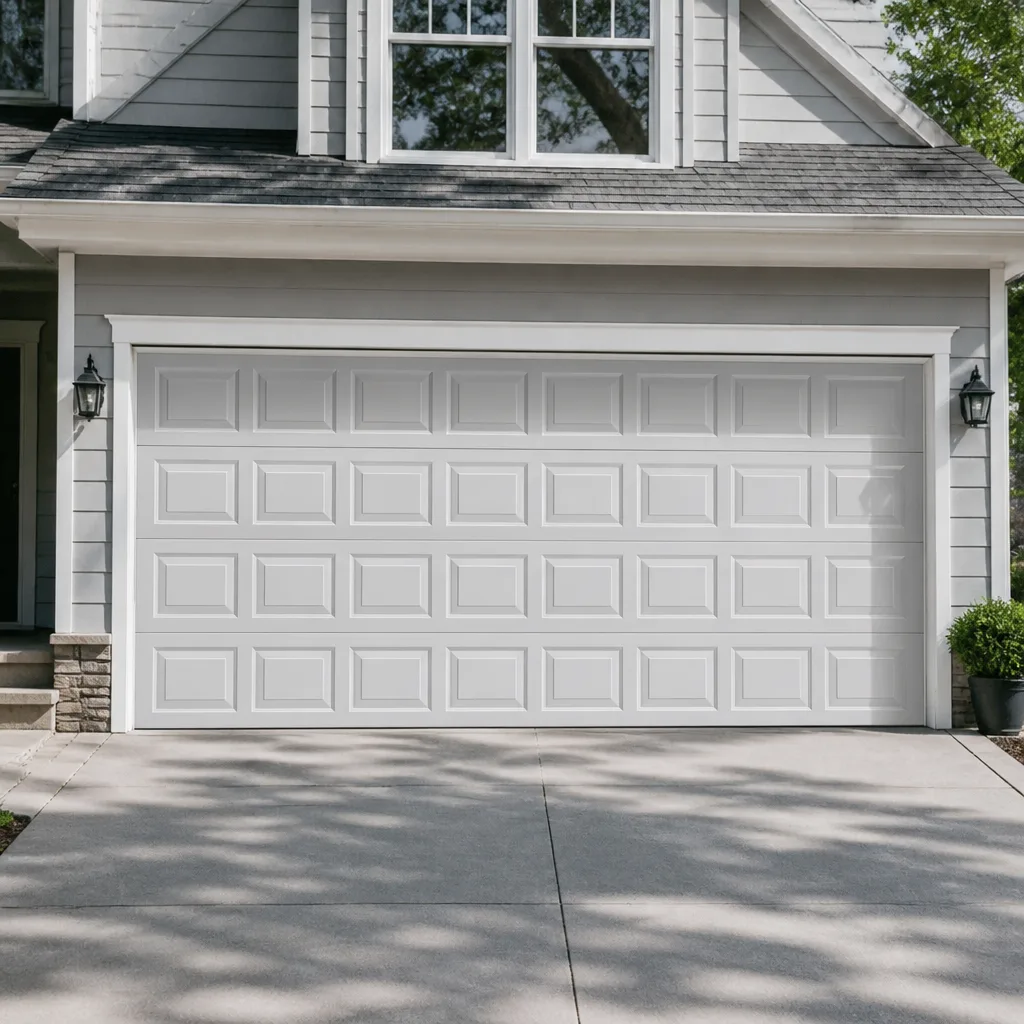 Raised-panel steel
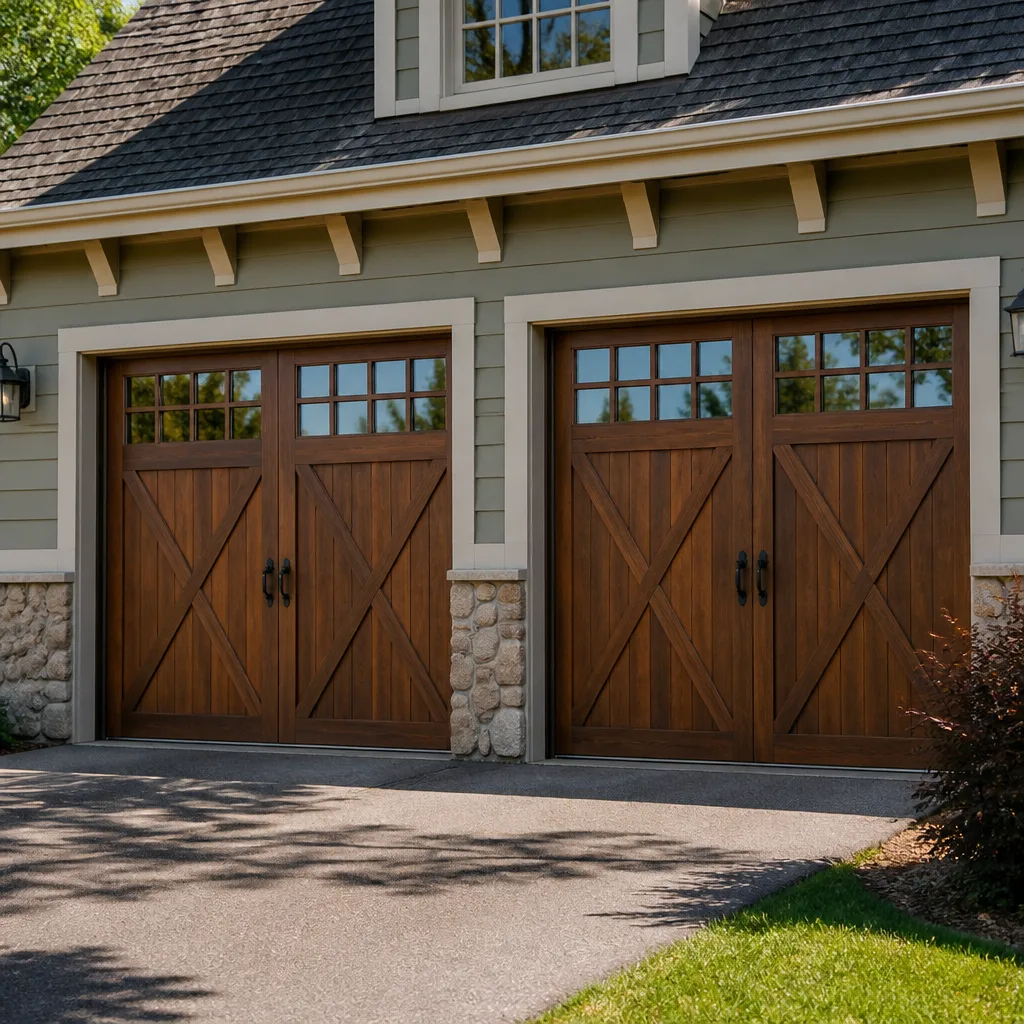 Carriage house
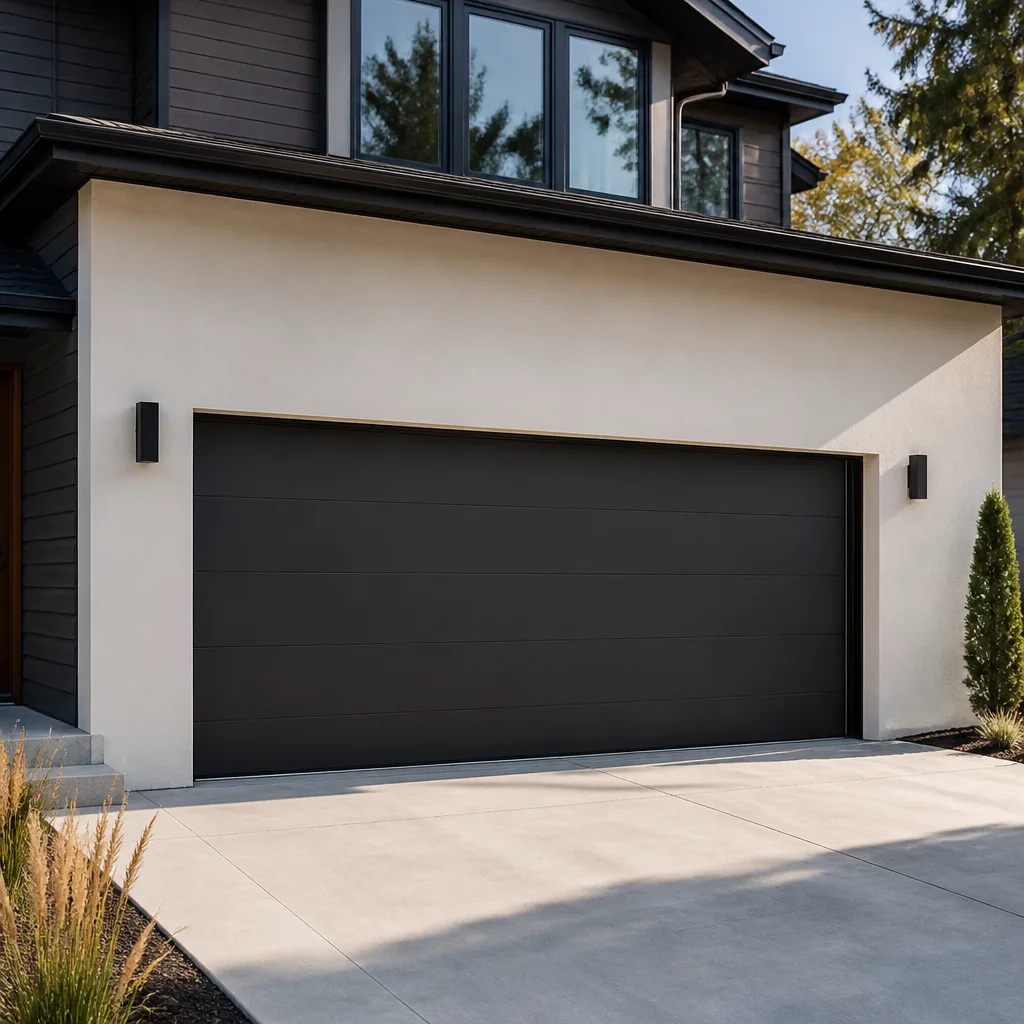 Modern flush
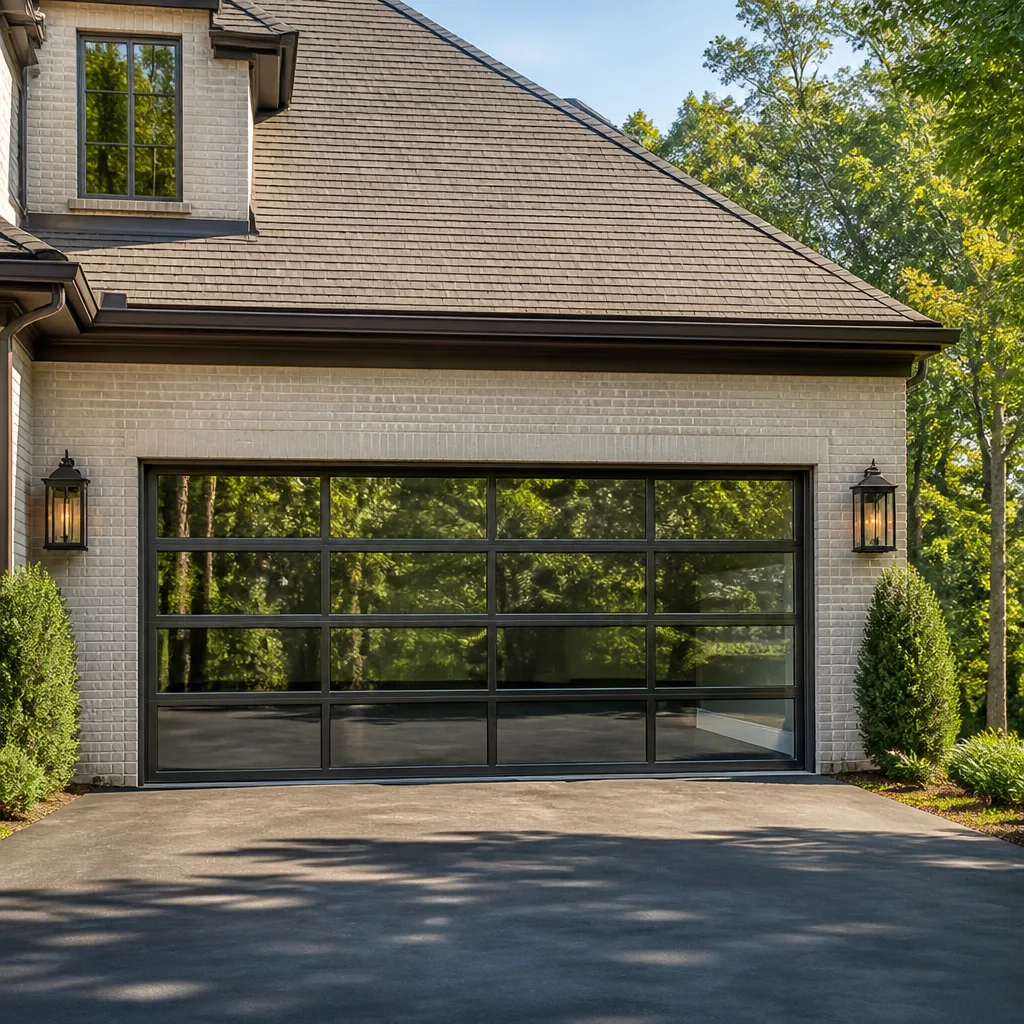 Full-view glass
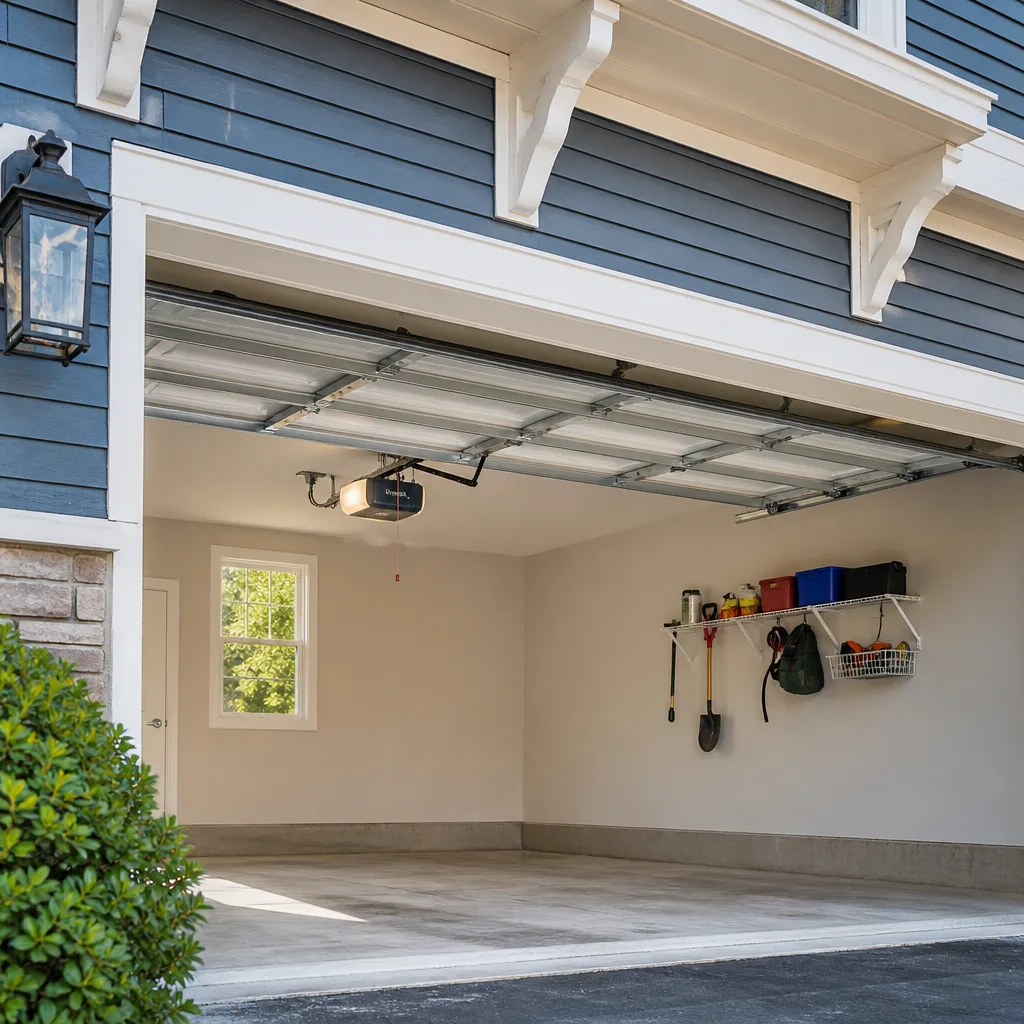 LiftMaster openers
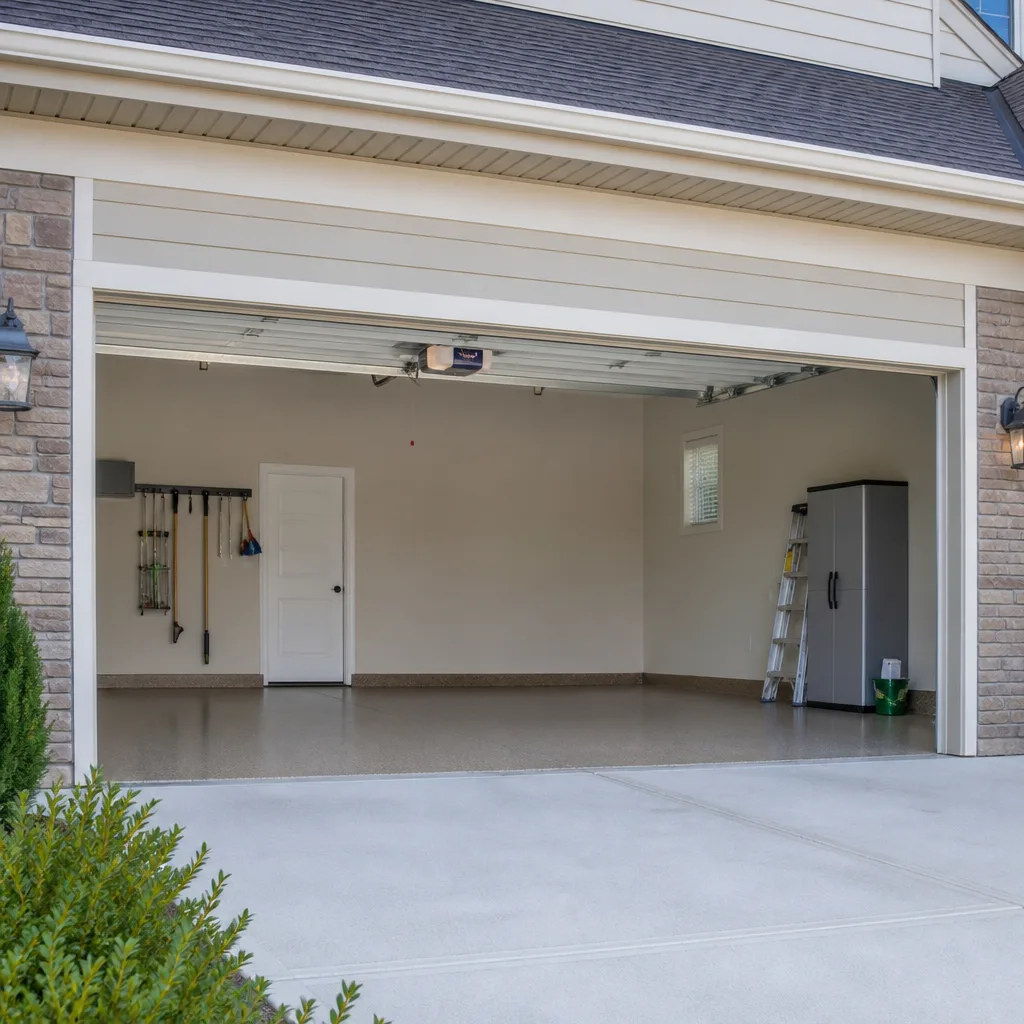 Chamberlain openers
Full 25-point door and opener safety check with every visit - springs, cables, rollers, tracks, and your LiftMaster or Chamberlain opener included
You get a price before we start. It does not change when the truck arrives.
Get your free estimateDIY vs Professional Garage Door: The Long Beach Homeowner’s Decision Guide
Torsion spring replacement is the most-searched garage door DIY task in America. It is also the repair most likely to put a homeowner in the emergency room. A standard residential torsion spring stores roughly 50 to 70 foot-pounds of torque when wound, and the winding bar slipping from the cone releases that energy in a fraction of a second. In Long Beach garages lined with beach cruisers, surfboards, and storage racks, the working space is tighter than the YouTube videos ever show. This guide gives you a clear, unhedged answer to the DIY-versus-professional question: which tasks genuinely make sense to do yourself, which ones never do, and how to tell the difference in a salt-air climate that wears down hardware faster than inland areas.
Quick Answer
The honest answer is that lubrication, sensor alignment, and simple hardware tightening are safe DIY territory for most Long Beach homeowners. Spring replacement, cable work, and anything involving the opener’s electrical components are not. The calculation does not change based on your mechanical skill, your tool collection, or how many tutorials you have watched. A spring under tension does not care how handy you are.
Styles & brands we work with
Table of Contents
- DIY Tasks That Are Genuinely Safe
- Tasks That Should Never Be DIY
- How to Evaluate YouTube Instructions
- The Hidden Cost of Failed DIY in Long Beach
- What a Professional Does in the First Five Minutes
- Long Beach Specific Factors
- Common Mistakes to Avoid
- When to Call a Professional
DIY Tasks That Are Genuinely Safe
Some garage door maintenance tasks are not only safe to do yourself, they are actually better done by the homeowner. You are the person who hears the door every morning at 6:45 when the neighbor’s dog walker passes. You notice when the sound changes. That familiarity matters, especially in Long Beach where the ocean air accelerates rust on rollers, hinges, and bare steel hardware.
Here is our unhedged list of tasks you can do this weekend without calling anyone:
- Lubricating the rollers, hinges, and springs. Use a white lithium grease or a silicone-based garage door lubricant. Spray the roller stems, hinge pivot points, and the full length of the torsion spring. Do this every six months in Long Beach. The salt air means hardware that goes unlubricated for a year will start to bind and squeal.
- Cleaning the photo-eye sensors. If the door reverses when closing and the sensors blink, the fix is usually a soft cloth with glass cleaner. Wipe both lenses. Check that nothing has shifted in front of them. This is the single most common no-cost fix in garage door land.
- Tightening loose bolts and brackets. Doors cycle hundreds of times per month and vibration works bolts loose. Go around with a socket set and snug up the bolts on the hinges, track brackets, and the opener rail. Do not overtighten; stripped threads turn a two-minute job into a track replacement.
- Replacing weatherstripping. The rubber strip along the bottom of the door plus the side and top seals can be replaced with basic tools. In Long Beach, weatherstripping also keeps out moisture, salt mist, and the occasional curious rat from the alley. Inspect it twice a year.
These four tasks account for a meaningful share of the service calls we run in Long Beach. A homeowner who stays on top of them will push off many repair visits by years. The key is knowing where the safe zone ends. Lubrication and tightening involve hardware that is not under tension. Everything beyond this list starts to involve stored energy, and the risk profile changes completely.
Tasks That Should Never Be DIY
There is a mechanical reason this list exists, and it is not because professionals are protecting their trade. It is because the forces involved exceed what the human body is built to absorb. The distinction is physical, not cultural or gatekeeping.
These are the tasks where DIY attempts in Long Beach consistently end in injury, a larger repair bill, or both:
- Torsion spring replacement. The spring stores enough energy to lift a 150 to 250 pound door several thousand times before failing. When a winding bar slips during release, that energy transfers to whatever is holding the bar. Your forearm and wrist are weaker than the spring. Amputation injuries, facial fractures, and worse are the documented outcomes. Never search for removal instructions. If the spring is broken or stretched, stop using the door and call a professional.
- Extension spring replacement. Older Long Beach homes, particularly in neighborhoods like Belmont Heights and Cal Heights, still have extension spring systems running along the horizontal tracks. The spring is under maximum tension when the door is closed. If the safety cable has not been retrofitted, a broken spring becomes a projectile that travels at 100+ miles per hour. Even with a safety cable, removing a live spring without the correct tools is a serious gamble.
- Cable replacement. Garage door cables are not like bicycle cables. They carry the full weight of the door and run through drums that are adjusted to the millimeter. A cable that comes off the drum mid-cycle drops the door instantly. A homeowner in Long Beach once attempted this on a Saturday morning because the parts were at Home Depot. The door needed a full track realignment, the cost of which was double the original cable repair.
- Opener circuit board and electrical component work. Modern openers, including LiftMaster, Genie, and Chamberlain units, have logic boards, capacitors, and batteries that hold charge. Diagnosing a bad board versus a bad wall control versus a bad safety sensor requires the right multi-meter and pinout knowledge. We service openers across all major brands and the most common homeowner presentation is a door that opens but will not close, which is almost never a board problem and almost always a sensor issue. Misdiagnosing this wastes money on parts you cannot return once installed.
None of this is a judgment on your skill. It is a statement about the physics. A spring under full tension has no awareness of the size of your tool collection or the confidence in your grip. We have repaired doors in Long Beach where the homeowner was genuinely competent, got the spring most of the way installed, and then stripped the cone threads in the final quarter-turn. The resulting repair cost more than the professional replacement would have from the start.
How to Evaluate YouTube Instructions
Not all instructional video is created equal. Some of it is produced by genuinely competent technicians. Some of it is filmed by a homeowner who got lucky once and now believes he is qualified to teach others. If you are planning to tackle a DIY garage door task after watching a video, run it through this filter.
Signs the source is technically credible:
- They tell you what can go wrong. A competent teacher spends the first 30 to 60 seconds explaining the failure mode of this exact repair. If the video makes it look easy without mentioning what happens when something slips, the creator is hiding information.
- They list the specific tools before touching the door. Exact socket sizes, winding bar diameter, ladder type, vice grips. A source that says “some basic tools” is not operating at a professional level.
- They show the marks, measurements, or reference points. Professional-level content will show you the exact witness marks on the spring cone, the drum position, or the track measurement. Amateurs skip the reference points and go straight to disassembly.
- They cover re-tensioning as its own segment. Anyone who treats winding the spring as an afterthought or a quick montage should lose your trust immediately. Winding is the highest-risk step in the entire repair.
- They identify when a job is beyond DIY. A credible source will say “if you see X condition, stop here and call someone” rather than pretending every door is the same.
Signs you should close the tab and pick up the phone: the video is under four minutes, the instructor uses one wrench for everything, there is no mention of safety cables or winding bars, the door is disconnected mid-cycle, or the comments are full of people saying “I tried this and now my door is stuck.” Watch for these patterns and save yourself the trouble. A professional in Long Beach can diagnose and quote the job over the phone before ever arriving at your door.
The Hidden Cost of Failed DIY in Long Beach
The most expensive DIY repair is not the one you pay a professional to redo. It is the one that voids your door’s warranty. Most manufacturers, including Amarr, Wayne Dalton, and Raynor, have explicit warranty language that excludes damage caused by improper installation or unauthorized service. If you attempt a spring replacement, damage the door, and then file a warranty claim, the claim will be denied. You have converted a $300 repair into a $1,500 door replacement.
There is a second hidden cost that Long Beach homeowners consistently overlook: the used parts market. If you damage a single panel on a sectional door, you cannot buy just that panel from most manufacturers. The door is sold as a set. If your specific panel style has been discontinued, a single dented panel can render the entire door cosmetically at-fault with no repair path. You are now pricing a full new installation because of one bad decision at the workbench.
Then there is the time cost. A professional completes a torsion spring replacement in 45 minutes to 90 minutes. The Long Beach homeowner doing this for the first time will spend four to six hours, most of it watching videos, running to the hardware store, and re-checking measurements. From our Blackstone Garage Door Repair home perspective, we respect the ambition. But the economics rarely work out.
The final hidden cost: when a DIY repair damages the track, the opener, or the cable drum, the scope of work expands. What started as a $200 spring replacement becomes a $600 spring, cable, drum, and track job. We have seen this unfold in neighborhoods from Bixby Knolls to the Naples islands. The door usually ends up worse off than it was before the DIY attempt started.
What a Professional Does in the First Five Minutes
When a technician walks up to a garage door in Long Beach, the first five minutes are diagnostic. This is the work that does not translate to video and can change the entire repair outcome. Here is what happens that most homeowners never see.
First, the door is put through a full cycle by hand, not with the opener. The technician is listening to the bearings, watching the cable drums for even wind, checking the gap between the door and the track, and feeling for binding. A homeowner typically skips this and assumes the problem is whatever broke most recently. But a snapped cable is often the symptom of a worn bearing, not the root cause. The professional is looking for the root cause.
Second, the balance of the door is tested at the half-open position. A correctly balanced door stays where you put it with the opener disconnected. If the door drops, the springs are weak or broken. If it rises on its own, the springs are overwound. This one test explains most broken-openers and stripped-gears calls we run in Long Beach. The door balance is the spine of the whole system.
Third, the technician inspects the entire system, not just the part the homeowner called about. The cable drums, the hinge lineup, the spring cones, the opener rail, the safety sensors. A professional sees the related failure before it happens. This is the difference between a repair that lasts a month and one that lasts five years. It is not about effort; it is about knowing what to look at.
For Garage Door Repair in Long Beach, this diagnostic sequence is the core of the service. The actual repair takes less time than the diagnosis on a routine call. That is the pattern of a competent tradesperson.
Long Beach Specific Factors
Long Beach is not a generic climate, and the garage door in a Belmont Shore bungalow faces different stresses than a door in, say, Phoenix or Denver. Here is how the local environment influences the DIY-versus-pro decision.
Salt air and its effect on hardware
The prevailing breeze off the Pacific carries salt mist inland for several miles. For garage door hardware, this means faster rust on bare steel springs, rollers, and hinges. A torsion spring in Long Beach that is not lubricated will develop surface rust within 18 months. Surface rust is not a structural problem, but it roughs the spring surface and accelerates wear. DIY lubrication helps. But when the spring snaps after five years instead of ten, that is the salt air at work. The break happens inside the cone, and nobody gets a warning.
Older housing stock and non-standard doors
Long Beach has a huge inventory of homes built between 1910 and 1960. Many of these garages were originally carriage houses or were converted later. That means door sizes and track layouts do not always match the modern seven-foot-wide standard. A DIYer ordering a “universal” torsion spring off the internet frequently discovers the coil diameter or wire gauge does not match a 1940s era door. For Garage Door Installation in Long Beach, the older the home, the more likely the door needs custom measurements before any work begins.
Alley-loaded garages and limited workspace
In neighborhoods like Rose Park, Bluff Heights, and Alamitos Beach, garages are accessed from the alley and built at the back of a narrow lot. The working space is tight, often with a wall two feet from the door edge. Winding a torsion spring requires a full extension of the winding bar above your head. If the ceiling is low or the side clearance is tight, the job gets measurably more dangerous. Professionals deal with this by using shorter bars and modified winding sequences. A DIYer with a standard kit will be fighting the building itself.
Non-climate-rented garages and storage
Many Long Beach garages are used for storage, surfboards, bicycles, and beach gear rather than cars. That clutter sits directly under the door path. When a door comes off its track, it has a lot of room to accelerate before it hits the floor or a storage rack. Real world outcomes in Long Beach garages include expensive repair bills for the door and the lawn equipment or surfboard underneath it. Keep the area under the tracks clear, especially if you are testing door balance or running the opener.
For Garage Door Opener Repair in Long Beach, the salt air and the tight workspace both matter. Wi-Fi connected openers from LiftMaster and Genie have antenna boards that corrode over time in coastal air. A homeowner replacing a remote battery and finding the opener still dead is usually looking at a board-level issue that needs a professional’s diagnostic tools.
Common Mistakes to Avoid
- Using WD-40 on the springs. WD-40 is a solvent, not a lubricant. It strips the protective layer and accelerates rust. Long Beach’s salt air makes this mistake worse than inland. Use white lithium grease or a dedicated garage door lubricant.
- Replacing only one spring. Torsion springs are rated for a certain number of cycles and wear together. If one breaks, the other is close behind. Replacing one means paying for labor twice. This is the best argument for having a professional inspect both springs on the first visit.
- Unbolting the spring before releasing the tension. This mistake is most common among confident DIYers who skip the release step because the video made it look easy. The spring cone becomes a projectile. If you are reading this after doing it, stop and step away from the door.
- Adjusting the spring without marking the starting position. Even if you survive the adjustment, an overwound or underwound spring changes how the door balances and will eventually damage the opener gear. Without a clear reference mark, you have no way to undo the change.
- Forcing the door closed when the opener strains. If the opener is working hard to lift the door, the springs are failing or broken. Forcing the door closed strips the opener gear. The door should fully open and close under the spring’s power, not the opener’s.
- Ignoring the safety cables on extension springs. If your Long Beach home has an older extension spring system and the safety cables are missing, replace or install them before doing any other work on the door. A snapped spring without a cable is a bullet in an enclosed garage.
- Assuming the YouTube door matches yours. Door age, spring type, track geometry, and opener brand all change the procedure. A video for a 2009 Clopay door may not translate to your 1985 Wayne Dalton. The brand matters less than the spring type and age of the system.
When to Call a Professional
Call a professional when the spring is broken, when the cable is off the drum, when the door is off its track, or when the opener is behaving intermittently. These are not judgment calls. A trained tech can source the correct spring for your specific door, replace it under controlled release, and verify the door’s balance before leaving. Blackstone Garage Door Repair offers free estimates in Long Beach and works across LiftMaster, Chamberlain, Genie, Clopay, Amarr, Wayne Dalton, Craftsman, and Raynor systems. We show up knowing your door. Call (866) 477-5637.
See the difference
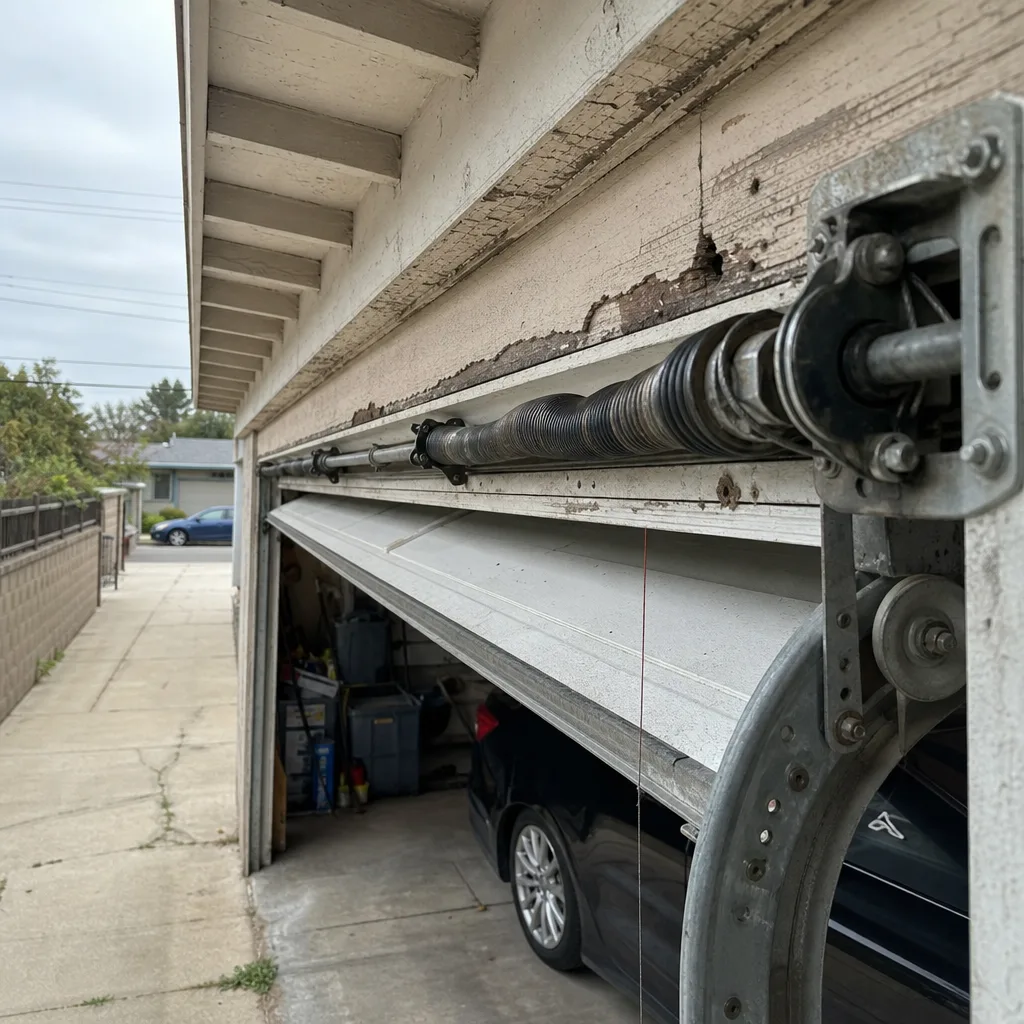 Before
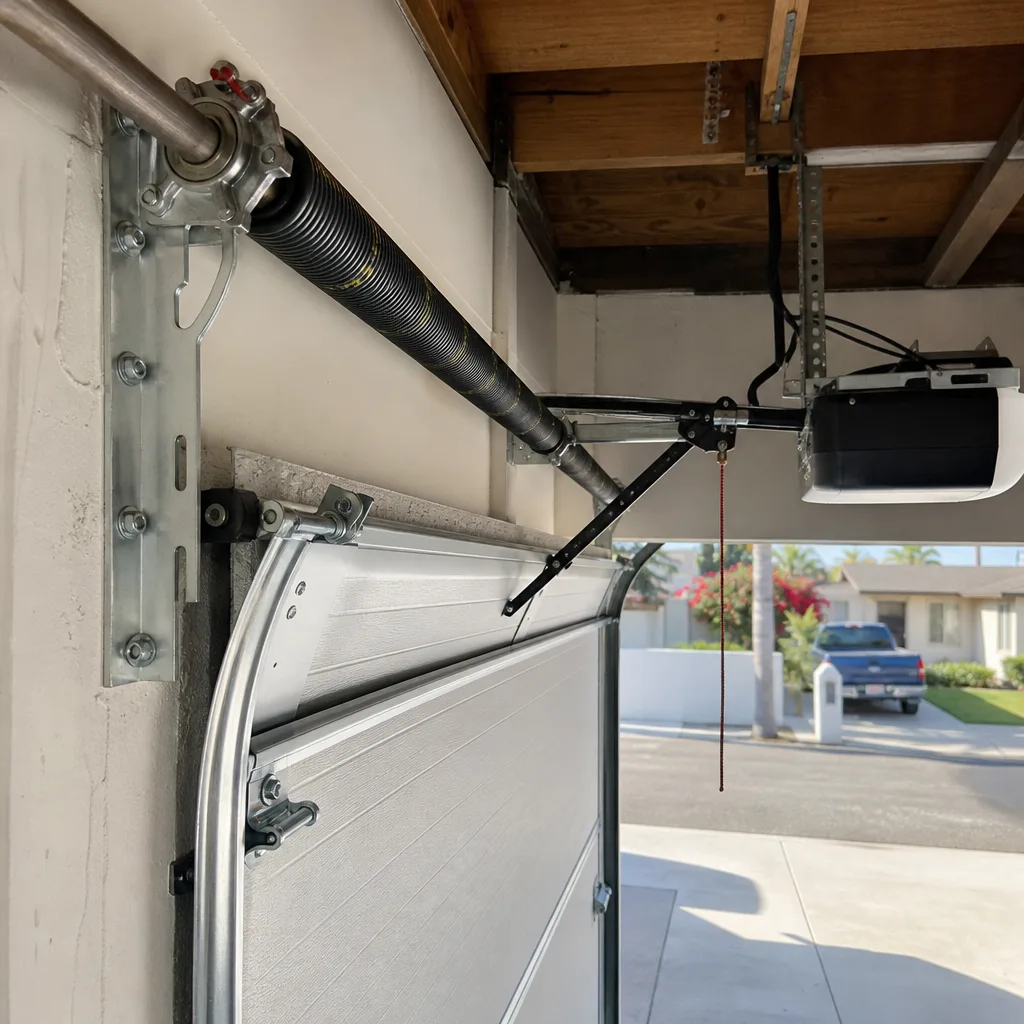 After
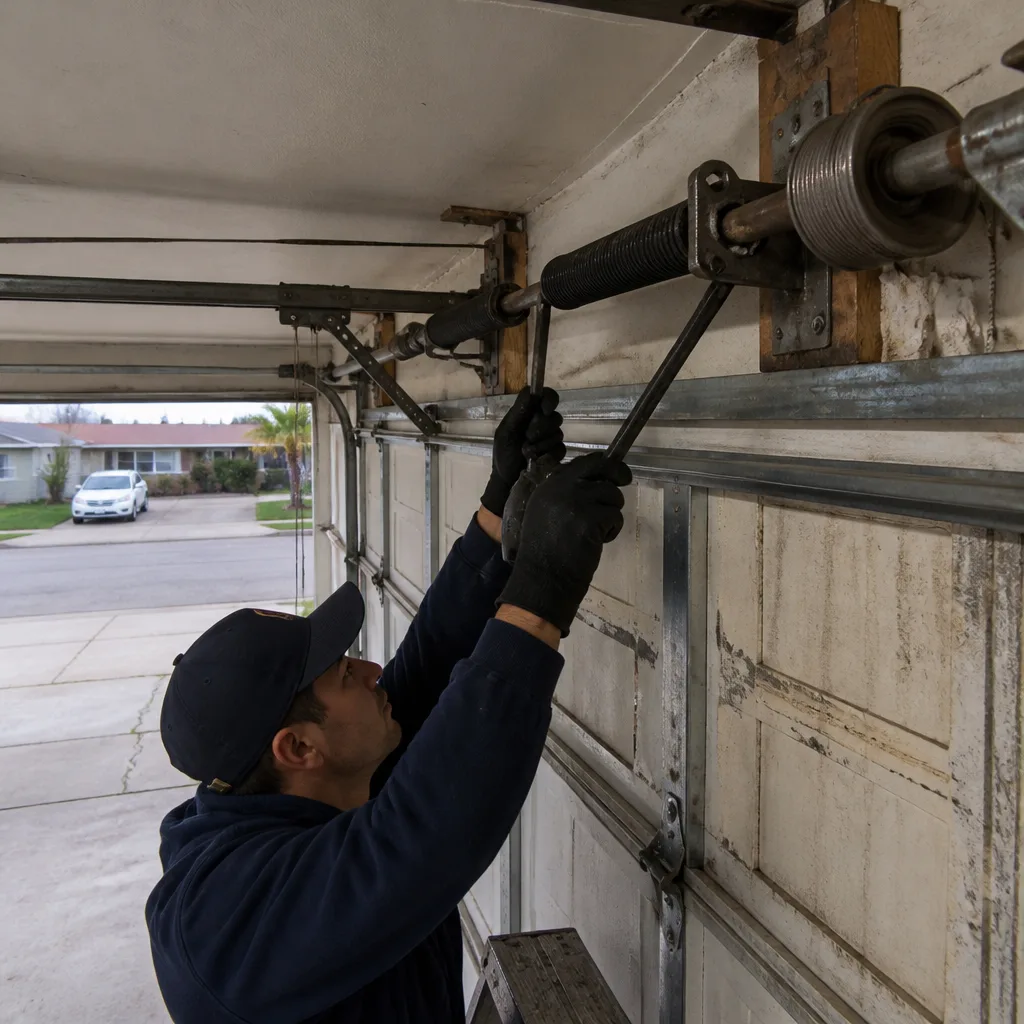 Before
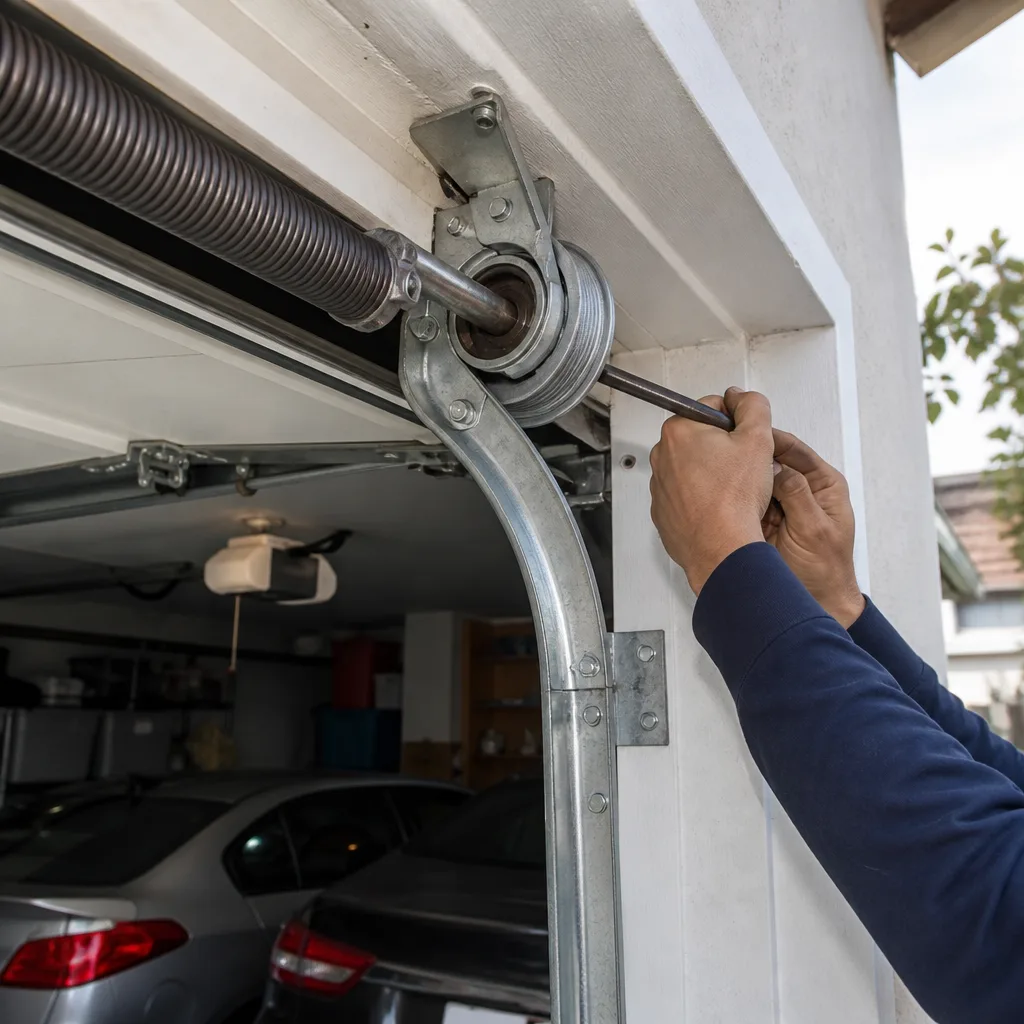 After
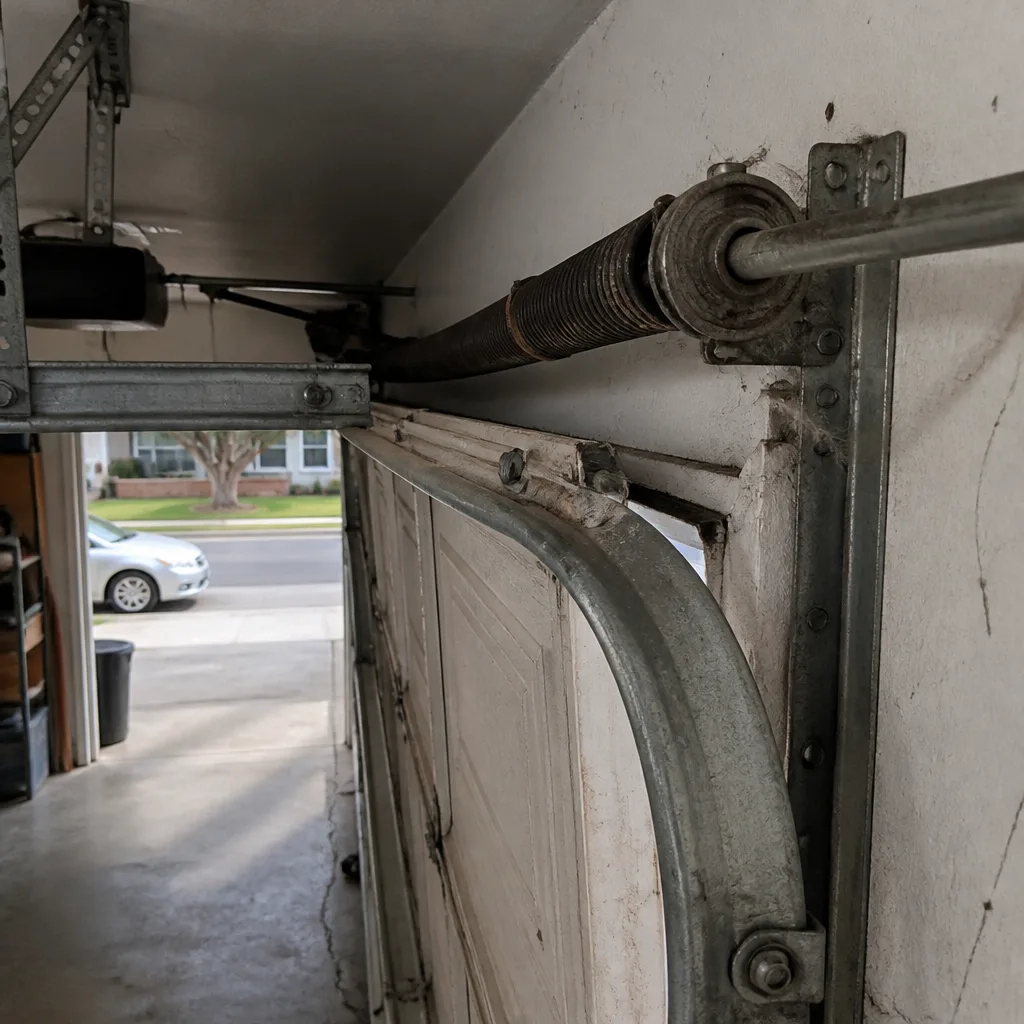 Before
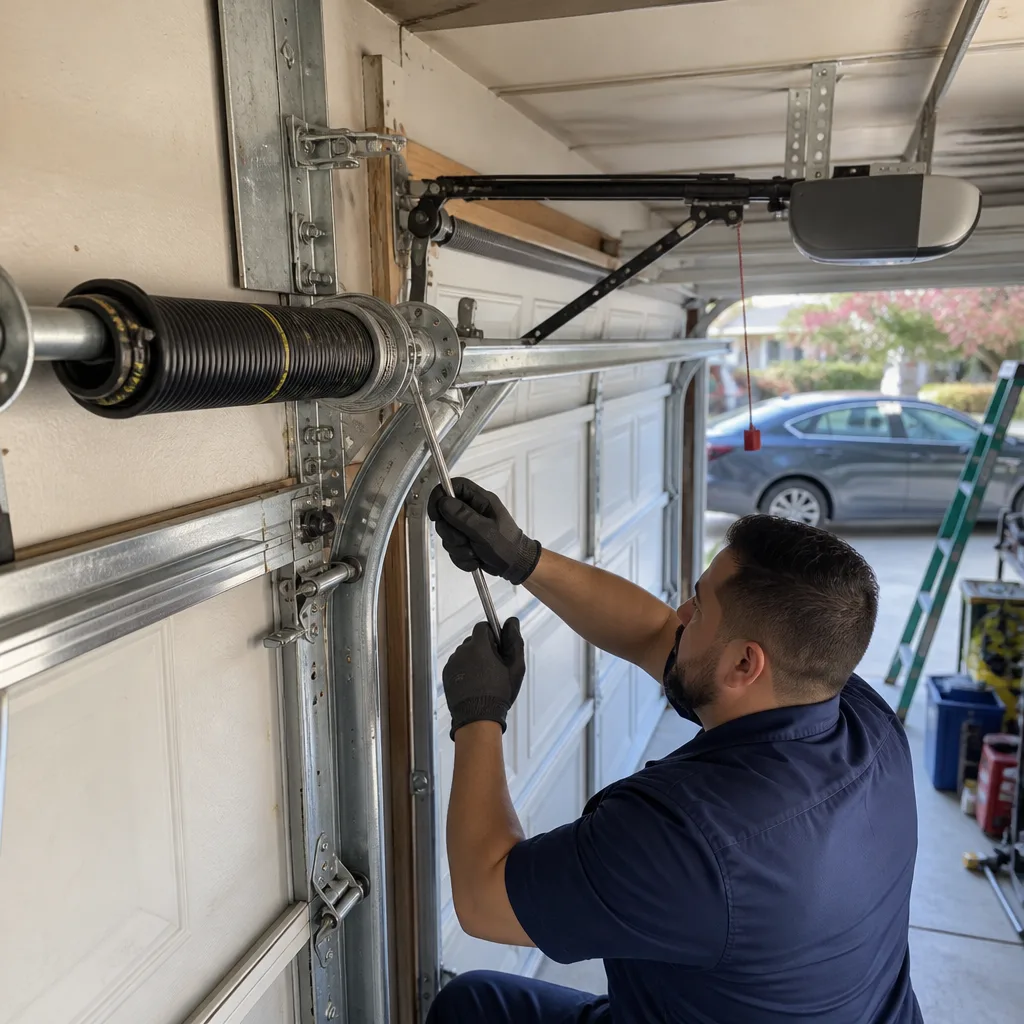 After
Frequently Asked Questions
You can, but you should not. A torsion spring stores enough energy to cause severe hand and arm injuries if the winding bar slips, and the risk does not change with skill level. Call a professional for anything involving spring tension.
Most Long Beach homeowners pay between $180 and $340 for a torsion spring replacement, depending on the door weight, spring size, and whether one or both springs are replaced. See our Garage Door Cost Breakdown: The Long Beach Homeowner’s Reference for 2026 for full pricing details. The exact quote is confirmed before any work starts, so you will never be surprised by the invoice.
We run same-day repair calls across Long Beach and will give you a narrow arrival window when you call. If the spring is broken, we carry a range of common sizes on the truck and can usually complete the job in one visit. Call (866) 477-5637 to check today’s availability.
Intermittent opener behavior is usually a sensor alignment issue, a corroded antenna board (common in Long Beach’s salt air), or a failing logic board. Most of these conditions are diagnosis-first repairs, meaning a professional should test the system rather than just replace the whole opener.
It depends on the door’s panel condition and track integrity. A spring replacement is usually worth it. A full panel and track replacement is often not. A professional can give you a straight answer on whether a repair or a new installation is the better long-term spend.
Blackstone Garage Door Repair services LiftMaster, Chamberlain, Genie, Clopay, Amarr, Wayne Dalton, Craftsman, and Raynor. If your door or opener is from one of those brands, we are trained and equipped to work on it. Call (866) 477-5637 to confirm your system’s details.
The Bottom Line
Lubricate, clean, and tighten on your own. Never touch springs, cables, or opener internals. The line between safe DIY and dangerous DIY is drawn by physics, not by how capable you are. Long Beach’s salt air and older housing stock add enough wrinkles that a professional diagnosis often saves money on its own. When the spring snaps or the cable drops, call a company that already knows your door’s system. We show up knowing your door, and we will give you a written price before any work starts. Call (866) 477-5637.
Written by the team at Blackstone Garage Door Repair, serving Long Beach since 2012.